The Colombian Coffee Squeeze
With a 23.7% wage hike confirmed for 2026, the cost of production in Colombia is skyrocketing. Why the global C-market’s silence is a risk to independent producers.
From our office in Pereira, the economic signals are unmistakable. The Colombian government’s announcement of a historic minimum wage increase isn't just a political headline—it’s a massive inflationary chain reaction that changes the math of coffee overnight.
Think of your local bakery. If the cost of wages, flour, and energy jumped by 24%, the price of your bread would go up immediately. It has to. In coffee, that doesn’t happen.
Coffee isn’t just grown by plants; it’s grown by people. Pickers, sorters, drivers, and mill workers. When labor costs rise this fast, everything follows: harvesting, transport, maintenance, and farm infrastructure.
The Detached Ticker
While production costs are exploding, coffee prices remain anchored to the C-Market—a global exchange driven by financial markets, not by the reality of Risaralda or Huila. A trader in New York doesn't see higher wages or rising fertilizer prices; they see a ticker.
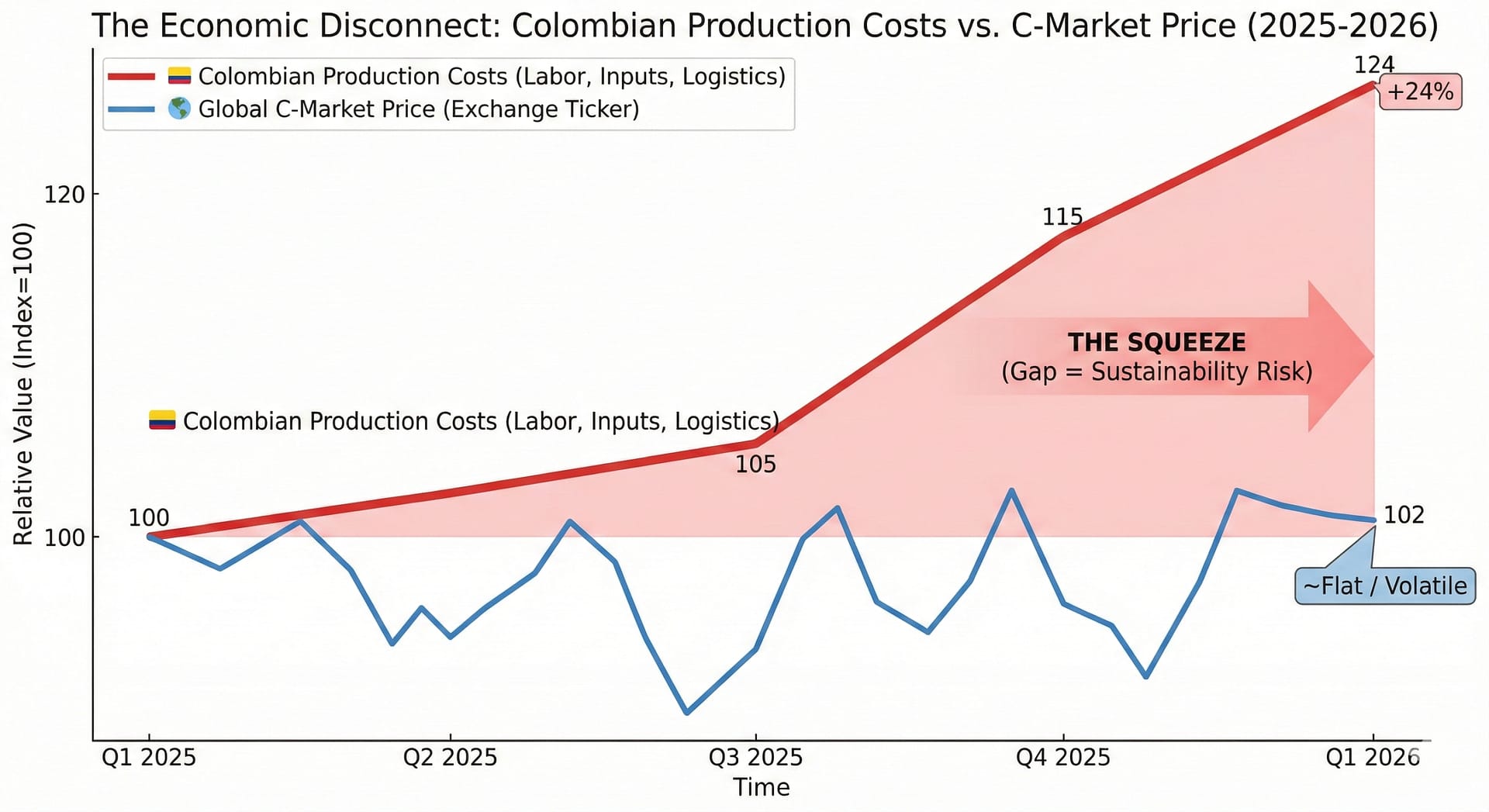
Figure 1: While Colombian production costs climb by nearly 24%, the global exchange price remains detached from local economic reality.
Farmers are getting squeezed from both sides. Many assume specialty coffee solves this, but with 95% of Colombian producers being small-holders tied to local supply chains, the majority remain vulnerable to the C-market trap.
The Risk of Consolidation
When small and mid-sized farms can’t survive this squeeze, they don’t just disappear—they get bought. Larger players and multinationals that can absorb volatility move in. What looks like "efficiency" from the outside is actually the quiet consolidation of origin.
At Origin Bridge, we believe that as long as prices are anchored to a stock market instead of the real cost of production, the pressure on independent farmers will only increase until ownership shifts.
Do we want a future of independent producers… or one where origin is controlled by balance sheets far away from the farms?